Types of countertops: quartz vs quartzite, granite, porcelain and the rest
Two things drive everything here: how hard a material is to work, and how it behaves in a kitchen. Quartz is the material a US shop cuts most often, but a shop cuts all of these. Difficulty below means how hard the material is to fabricate and finish without ruining it — not how hard it is to live with. No prices — countertop pricing is regional and quoted by the square foot. Click any row to open it up.
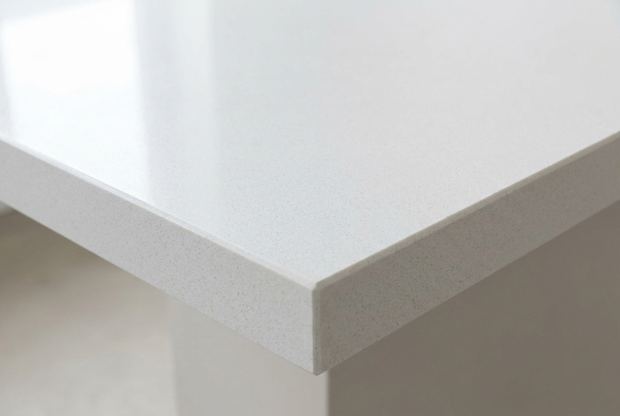
Quartz (engineered stone)
Engineered
Low–moderate
The US default. Consistent, non-porous, no sealing. Large-format and heat sensitivity are the things to respect.
A manufactured surface of crushed quartz bound in resin, sold under brand names like Caesarstone, Cambria, Silestone and MSI Q. The most common countertop material in US kitchens. The trade and homeowners call it quartz; "engineered stone" and "artificial stone" are the technical term for the same product — and it is a different thing from natural quartzite.
LookConsistent color and pattern across the whole slab, in every shade including convincing marble looks. Its predictability is exactly why the market likes it.
Hardness & careHard and non-porous, so it never needs sealing. It is heat-sensitive, though — a hot pan can mark or crack it — and prolonged UV can fade some colors, so most quartz is warranted for indoor use only — a few manufacturers now make UV-stable outdoor lines, so check the collection rather than assuming.
Fabricating itAmong the easier materials to fabricate: consistent, forgiving, no vein to match on most colors. The care items are heat during cutting and polishing, and handling large thin formats without cracking.
Worth knowingThe everyday material of the US trade. Assume most shops run more quartz than anything else.
Granite
Natural igneous
Moderate
The workhorse. Hard on tooling but predictable; every shop can cut it.
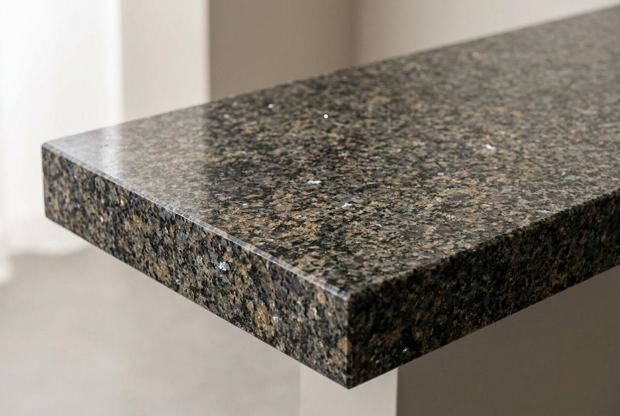
An igneous rock and the traditional workhorse of the counter trade. Widely quarried and imported; still one of the most-fabricated natural stones in US shops.
LookSpeckled and granular rather than veined, in blacks, grays, browns and reds. Hard-wearing and well understood.
Hardness & careHard, around 6 to 7 on the Mohs scale, with low porosity. Heat resistant and forgiving of everyday use; most granite needs sealing.
Fabricating itHard on blades and tooling but entirely predictable. Every shop knows how to cut it, and it is the baseline other materials are judged against.
Worth knowingAny experienced fabricator can work granite. It is the reference point, not the challenge.
Marble
Natural metamorphic
High
Soft and porous — scratches, chips and etches. Unforgiving of a slip.
Metamorphosed limestone, quarried mainly in Italy, Greece and Turkey. The classic luxury counter and still asked for by name — Carrara, Calacatta and Statuario are the varieties you hear most.
LookWhite to gray with gray or gold veining. Calacatta and Statuario carry bolder veins.
Hardness & careSoft, around 3 on the Mohs scale, and porous. It scratches, chips and etches — etching, acid dulling the polished surface, stays until the top is refinished, and sealing slows staining but does not stop etching. Needs sealing and realistic customer expectations.
Fabricating itEasy to cut but very easy to ruin. The difficulty is care: chipped edges, scratched polish, and vein matching across an island where a mismatch is obvious. Careless work on marble is expensive.
Worth knowingMarble is where finishing discipline shows: the polish, the vein match and the chip-free edge are all unforgiving.
Quartzite
Natural metamorphic
Very high
Extremely hard natural stone with a marble look. Destroys tooling and hides fissures. Not the same as quartz.
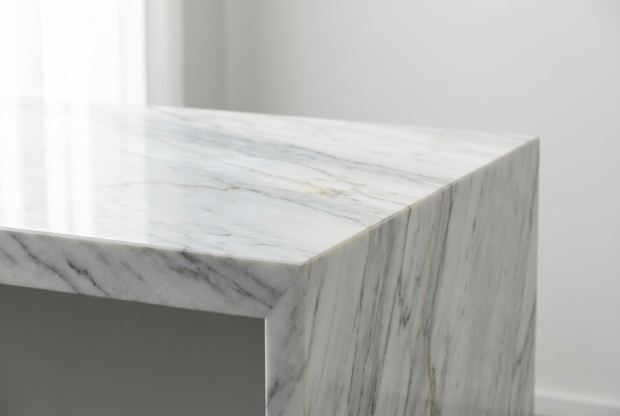
Sandstone metamorphosed into an extremely hard stone. The premium natural choice, because it offers a marble look with far better durability. Note the name: quartzite is natural stone; quartz is the engineered product — a constant source of confusion on the sales floor.
LookOften white, cream or gray with soft veining — visually close to marble, which is why it sells.
Hardness & careVery hard, around 7 on the Mohs scale — at least as hard as granite — while looking like marble, and unlike marble or dolomite it does not etch. Porosity varies by slab, so whether it needs sealing is tested, not assumed.
Fabricating itThe hardest natural stone to fabricate. It wears diamond tooling quickly, cuts slowly, and can hide internal fissures that only appear mid-cut. Softer stones are frequently mislabeled and sold as quartzite — a shop that has cut real quartzite knows the difference.
Worth knowingQuartzite rewards patience: slow feeds, fresh tooling and a willingness to stop when a fissure appears.
Dolomite
Natural
High
Sits between marble and quartzite. Often mislabeled as quartzite.
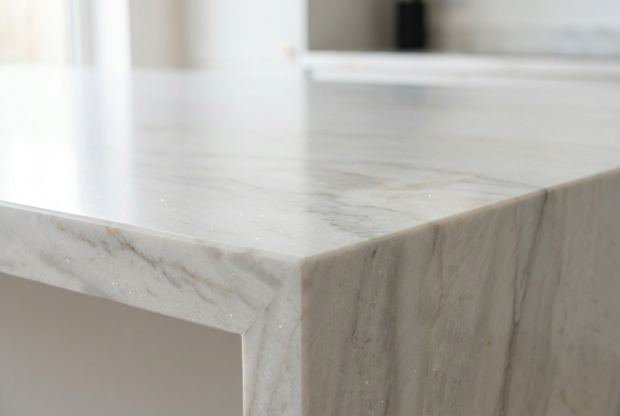
A limestone-family stone sitting between marble and quartzite in both hardness and workability. Super White is the variety most often seen. The dolomite vs quartzite question matters on the shop floor because dolomite is regularly sold as quartzite: a shop can price and schedule for one material and receive another.
LookWhite to gray with soft veining, again in the marble-look family.
Hardness & careHarder than marble, softer than quartzite. Slightly more stain resistant than marble but not immune — and, being a carbonate, it still etches from acids exactly as marble does; seal it.
Fabricating itModerate to high. The real risk is commercial rather than technical, which is why the labeling matters more than the cutting.
Worth knowingWorth knowing so the shop understands the conversation when a slab labeled quartzite behaves like something softer.
Porcelain
Sintered sheet
Very high
Thin, brittle, large-format — cracks at cutouts without the right tooling and support.
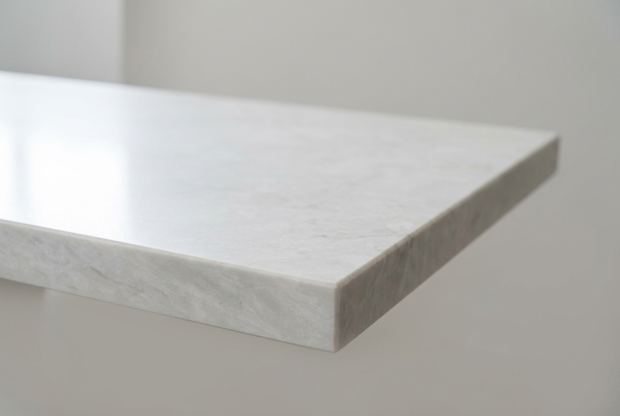
Not a natural stone — a manufactured large-format sheet fired at high temperature. Increasingly common for counters, backsplashes and outdoor kitchens.
LookA printed surface, so it can convincingly imitate marble, concrete or almost anything. Available in very large sheets, usually thin. On most decorated slabs the pattern is printed on the face only, so a cut edge shows a plain body — a limited range of through-body slabs carries the pattern into the thickness, which is what lets a mitered edge read as solid.
Hardness & careExtremely hard, non-porous, heat, scratch and UV resistant. Needs no sealing, and works outdoors.
Fabricating itGenuinely difficult and a real skills bottleneck. Sheets are thin, brittle and large, so they crack at cutouts and chip at edges without the right tooling and technique. Handling needs vacuum lifters and a careful crew. Mitered edges on a thin sheet are a specialist skill.
Worth knowingLarge-format porcelain and sintered handling is a growing differentiator — worth asking who in a shop is trained on it.
Sintered stone
Sintered
Very high
Ultra-compact; specialist tooling and vacuum handling. Dekton, Neolith, Lapitec.
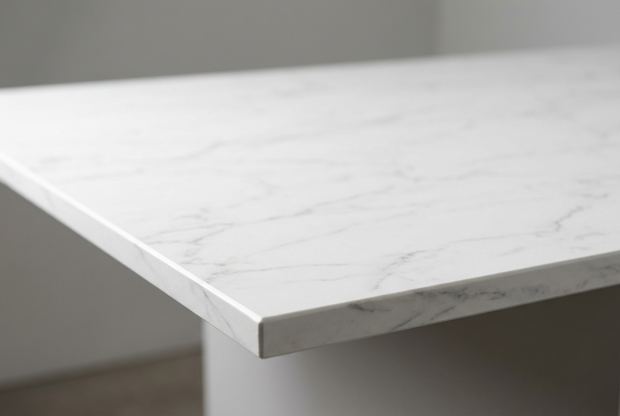
Sintered stone is made by compressing and fusing mineral particles into an ultra-compact slab. Dekton, Neolith and Lapitec are the names you hear, and it is closely related to porcelain and often discussed alongside it.
LookConsistent, manufactured appearance across a wide range of finishes, in large-format sheets.
Hardness & careAmong the hardest surfaces available. Non-porous, so no sealing; heat and UV stable, suitable for outdoor kitchens.
Fabricating itVery high difficulty for the same reasons as porcelain, often more so. Specific blades, specific feed rates, specific handling. Shops that invested in the tooling and training have a genuine edge.
Worth knowingPorcelain and sintered stone are handled the same way, so the skills transfer directly between them.
Solid surface
Man-made
Low
Acrylic/polyester (Corian and others). Seamless, repairable, worked more like wood than stone.
An acrylic or polyester composite — Corian, Wilsonart Solid Surface, LG HI-MACS and Staron are the names you hear; the trade often says "Corian" loosely for the whole category — Corian is the name that became generic. Worked more like a dense wood than a stone: cut with woodworking tooling, glued into seamless runs, and sanded rather than polished.
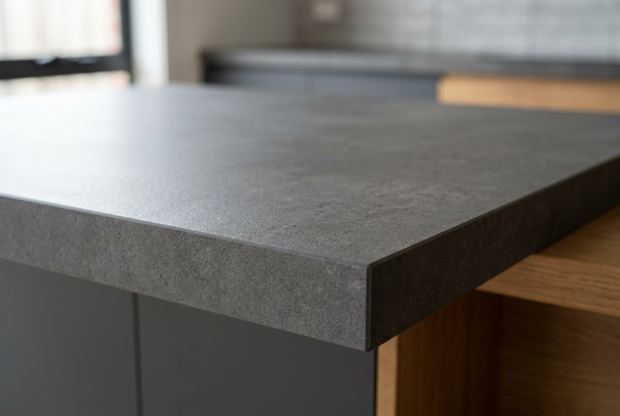
LookUniform matte-to-satin color, including stone looks. Its signature is the invisible seam — pieces bond into one continuous surface with an integrated sink.
Hardness & careNon-porous and repairable — scratches and minor burns sand out, which few natural stones need, since stone is normally refinished in place instead. Softer than stone and less heat resistant.
Fabricating itThe easiest of the counter materials to work. Solid surface fabrication is a different skill set: routing, thermoforming and adhesive seaming, not diamond cutting and polishing. ISFA runs a two-day fabrication course that ends in a certificate of completion, and the material manufacturers each run their own certified-fabricator programs — Corian, Wilsonart, LG HI-MACS and Staron among them. Each brand also publishes its own fabrication manual, and its certified shops build to that manual.
Worth knowingA whole neighboring trade. A fabricator strong in solid surface is not automatically strong in stone, and the reverse.
Soapstone
Natural
Low–moderate
Soft, non-porous, heat-proof. Popular in the Northeast; darkens with oil.
A soft, dense natural stone (high talc content) long used for counters, sinks and lab tops, especially in the Northeast. Architectural soapstone is harder than the carving grade.
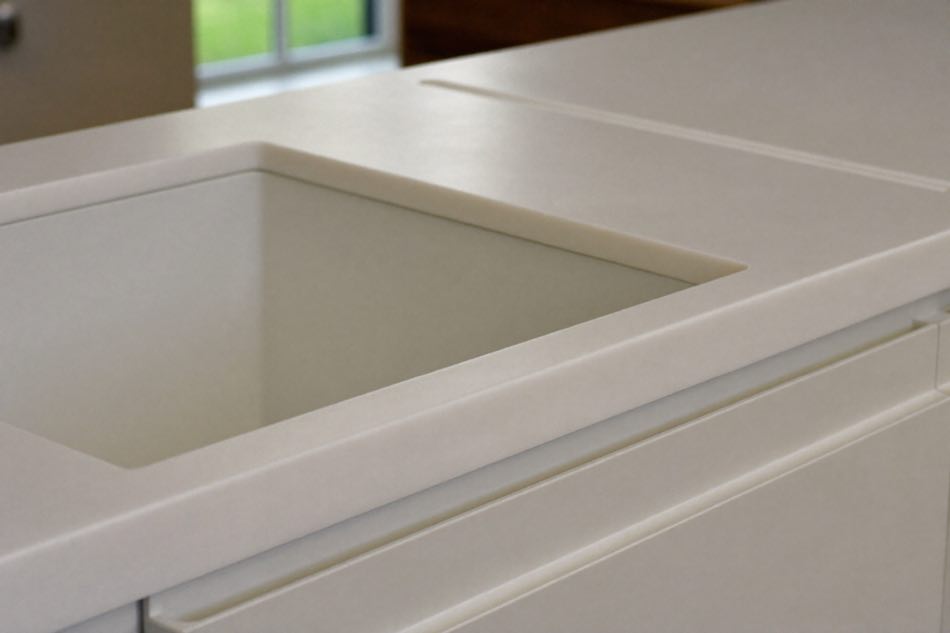
LookGray to near-black, sometimes with soft veining. It is left raw or rubbed with mineral oil, which deepens it to a rich charcoal.
Hardness & careSoft to the touch and scratchable, but completely non-porous and unaffected by heat or acids — you can set a hot pan straight on it and lemon juice does nothing. No sealing; oil is cosmetic.
Fabricating itSoft and forgiving to cut and shape, closer to a hardwood than granite. Scratches burnish out with oil and sandpaper, so field repair is easy.
Worth knowingA regional favorite. Its heat and acid resistance make it a genuine alternative to quartz for some customers.
Limestone
Natural sedimentary
Moderate
Soft and porous; marks easily. More common on floors and walls.
A soft, porous sedimentary stone in warm muted tones. More common on floors, walls and fireplace surrounds than on kitchen counters.
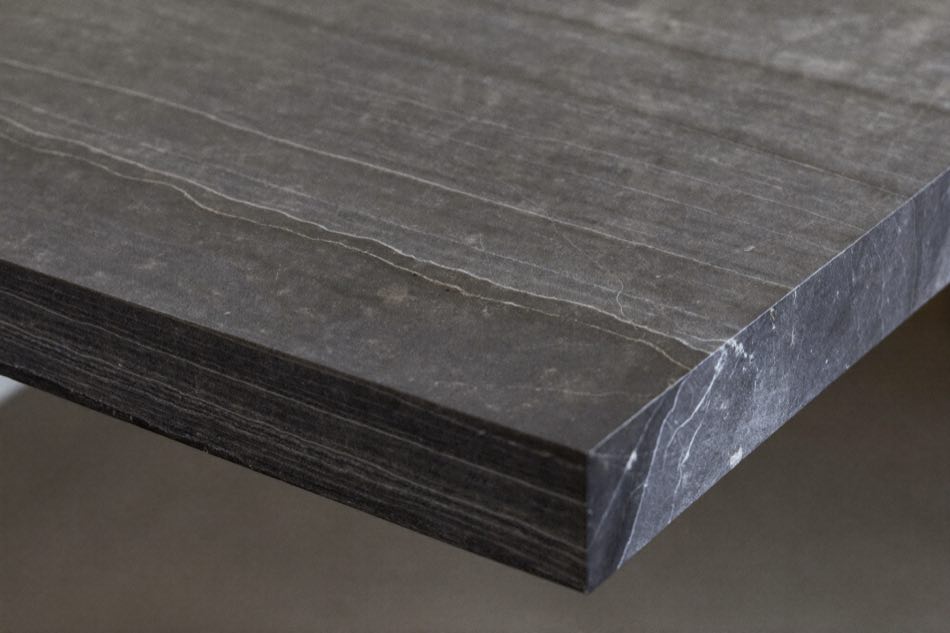
LookCreams, beiges and browns; more textural than dramatic.
Hardness & careSoft and porous. Marks and stains readily, and needs sealing.
Fabricating itModerate. Cuts easily, but the softness means edges damage easily.
Worth knowingRarely the core of a kitchen job, but common in the broader stone business.
Travertine
Natural sedimentary
Moderate
Natural voids need filling; rarely a kitchen counter.
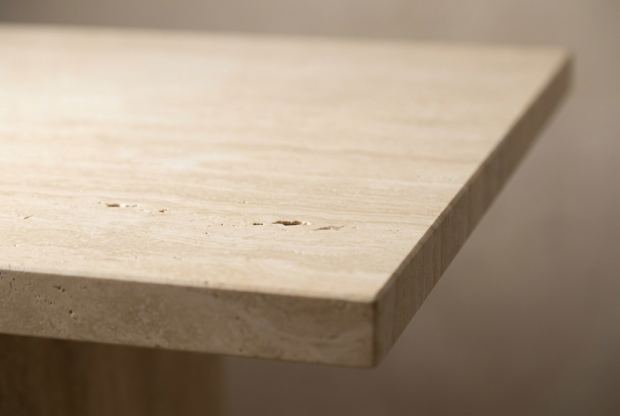
A limestone formed in mineral springs, which is why it has characteristic natural voids that are usually filled before sale.
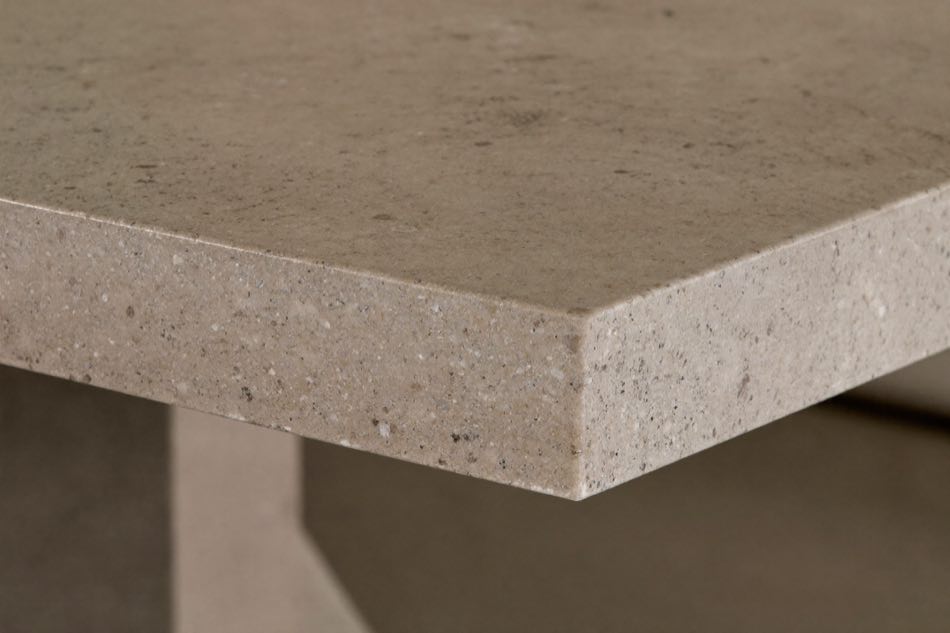
LookWarm, soft, muted tones — creams, beiges and browns, with a banded grain.
Hardness & careSoft and porous. Marks and stains, and needs sealing. More often specified for floors, walls and outdoor areas than counters.
Fabricating itModerate. Cuts easily, but the voids usually need filling and the softness means edges damage.
Worth knowingRarely a kitchen counter, but common in the wider stone trade.
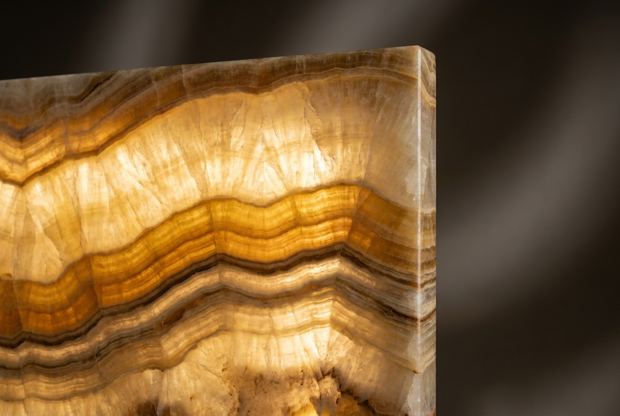
Onyx
Natural
Very high
Translucent and fragile; backlit feature work only.
A translucent calcite stone used for feature work rather than working surfaces.
LookDramatic, layered and translucent — frequently backlit in bars, reception desks and feature walls.
Hardness & careSoft, brittle and porous. Not a practical kitchen surface.
Fabricating itVery high difficulty. Slabs are fragile, often need resin backing or mesh reinforcement, and a break is catastrophic given the cost. Specialist work.
Worth knowingRare in kitchens, and the most delicate material in the shop — usually backed, handled by two people, and cut slowly.