Fabricator, installer, templater, CNC operator: who does what in a countertop shop
"Stone worker" covers a dozen different jobs, some barely related — a shop helper and a lead installer share a title in casual talk and almost nothing else. Here is the real list, in production order. Click any role to open it up. No pay figures: US pay is regional, and any number here would be wrong somewhere.
Shop
Fabricator
Fabrication shop›
Also called Stone fabricator, countertop fabricator, polisher, hand polisher
A stone fabricator turns a raw slab — granite, quartz or porcelain — into a finished countertop. Works from the shop drawing: cuts the slab down, builds the edges, cuts the sink and cooktop openings, polishes every visible surface, and hands a finished piece to the install team. In a small shop one fabricator does all of it and runs the machines too; in a larger shop the work is split and the fabricator is the hand-finishing and assembly specialist downstream of the CNC.
Gets here from
Helper
Moves up to
CNC/saw, install, or lead
Time to solo
2-3 years
What good looks like
Reads a shop drawing without needing it explained, and questions it when the measurements look wrong
Understands how a slab behaves — where it will break, which way the vein runs, how much support a cutout needs
Consistent finishing across a whole kitchen, not just the show piece
Treats waste seriously; ruined slabs are expensive regardless of speed
Sound wet-cutting habits and correct use of dust extraction
The path in and up
Most people become a fabricator by starting as a helper, usually two to three years before running a full kitchen unsupervised. From there the moves are sideways onto the CNC or saw, out to installation, or up to lead and then shop manager. Fabricators who learn to measure become very hard to replace.
Can you answer these?
Can you explain how a mitered edge is built up, step by step, so the joint disappears?
How do you decide how to lay cuts out on a slab to match the vein?
What's your dust and wet-cutting setup, and why does it matter?
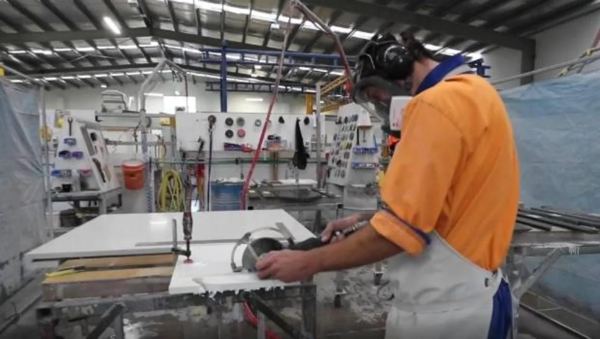
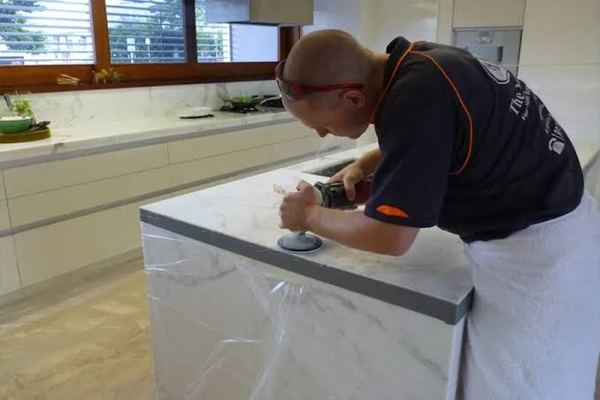
A fabricator wet-polishing an edge at the bench, hearing and eye protection on
Shop
Sawyer / Bridge Saw Operator
Fabrication shop›
Also called Saw operator, CNC saw operator
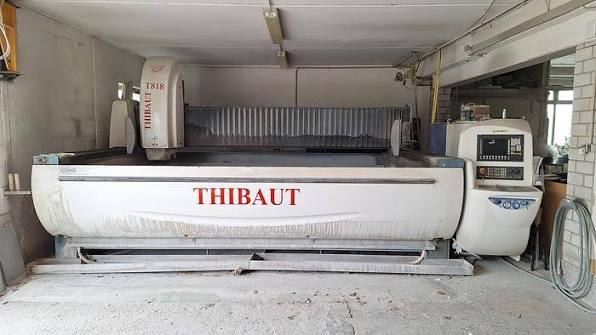
Runs the bridge saw — the first machine a slab meets. Loads the slab, sets or nests the cutting program, and takes the slab down to the rough shapes the fabricator will finish. On a modern five-axis saw they also cut miters and angles directly on the machine.
Runs
The bridge saw
Gets here from
Fabrication or machine work
Moves up to
CNC, waterjet, programming, lead
What good looks like
Reads drawings and turns them into a cutting plan without supervision
Nests cuts to get the most out of an expensive slab
Catches a wrong drawing before cutting rather than after
Keeps the machine calibrated instead of running it until it drifts
Handles slabs safely — this is where most serious shop injuries happen
The path in and up
Reached from fabrication or general machine work. From here the progression is into programming for the whole shop, or up to lead — the saw and the CNC sit alongside each other as machine roles rather than one leading to the other. Operators who can program as well as run the saw are the hardest of all shop hires to replace.
Can you answer these?
What can a five-axis saw cut in one setup that a three-axis saw has to send elsewhere?
Do you program it yourself, or does someone hand you the file?
How do you decide how to lay the cuts out on a slab?
Shop
Waterjet Operator
Fabrication shop›
Also called CNC waterjet operator
Runs the waterjet, which cuts with a high-pressure abrasive stream rather than a blade — so it handles curves, tight internal radii, inlays and detail a saw physically cannot. Slower and more expensive to run, and many shops run a combined sawjet.
Runs
The waterjet
Gets here from
Saw or CNC, after a few years
Moves up to
Whole-shop programming, or specialist
What good looks like
Prepares and edits cut files rather than only running them
Knows when the waterjet is the right tool and when the saw would do
Maintains the pump and abrasive feed; downtime on a waterjet is costly
Precision mindset — this machine exists precisely because the work is fussy
The path in and up
Usually entered from saw or CNC work after several years. A specialist end point for many, or a step toward whole-shop programming and management.
Can you answer these?
Is your machine a dedicated waterjet or a combined sawjet?
Do you prepare the cut files yourself?
What kind of cut is a waterjet the right tool for, and why can the saw not do it?
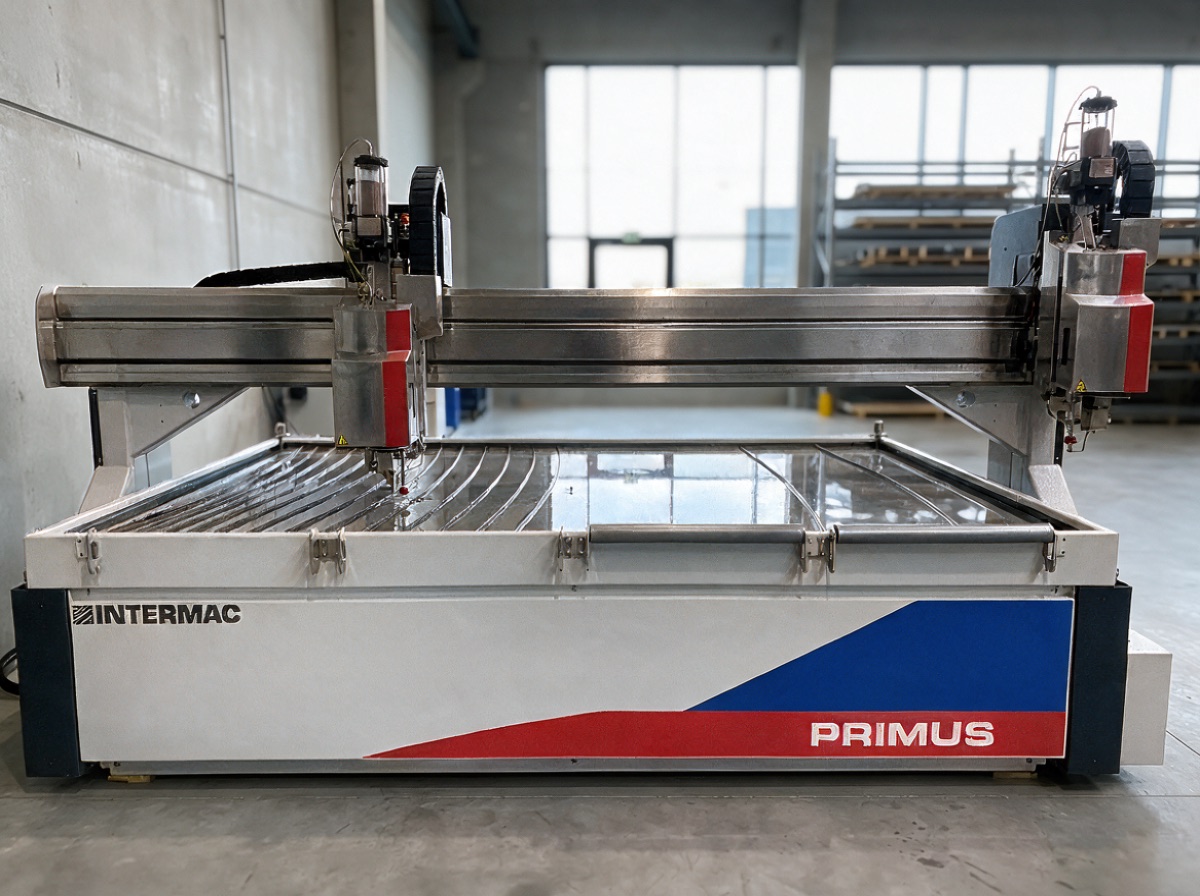
An Intermac waterjet — a high-pressure jet of water and abrasive cuts curves a blade can't
Shop
CNC Operator (stone)
Fabrication shop›
Also called CNC router operator, machine operator, workcenter operator
Runs the CNC router or workcenter that profiles edges, drills, cuts openings, machines drainboard grooves and runs polishing passes after the initial cut. In many shops it is the busiest machine on the floor. "Machine operator" covers a wide range, from a real programmer to someone loading a polisher — the machines and the responsibility are what matter.
Runs
The CNC router / workcenter
Gets here from
Helper — the main route in
Moves up to
Bridge saw, waterjet, hand fabrication
What good looks like
Comfortable across more than one machine, not locked to a single station
Understands tooling and can change and set tools correctly
Reliable and steady — much of the value here is producing consistently
Wants to progress; the strong ones are on the saw within a couple of years
The path in and up
The main pathway from helper into skilled machine work. From here the routes are the bridge saw, the waterjet, or across into hand fabrication.
Can you answer these?
What does setting the tooling involve, and what goes wrong if a tool is wrong in the file?
Do you adjust or write programs, or run files someone hands you?
What changes on the CNC when the material is porcelain or sintered stone rather than granite?
A CNC workcenter profiling an edge, slab held on vacuum pods
Field
Installer
On site — homes and commercial›
Also called Countertop installer, stone installer, install lead
A countertop installer takes the finished pieces out of the shop and fits them in the customer's home or on a job site: transporting stone safely, getting it into the building, dry-fitting to check fit, scribing to walls that are never straight, seaming on site, sealing where the material calls for it — natural stone yes, quartz and porcelain no — and cleaning up. Usually the only person from the business the customer ever meets.
Works
On site — homes & commercial
Gets here from
Helper
Moves up to
Lead installer, then templater
Time to solo
1-2 years
What good looks like
Finishes cleanly — tight seams, correct overhangs, no damage to cabinets or walls
Communicates with the customer; this is a customer-facing role
Solves access and out-of-square problems on the spot
Works safely with heavy material and takes manual handling seriously
Reliable on time — a late install cascades through the whole day
The path in and up
Helper into installer is the classic route, usually one to two years before running their own jobs. From there: lead installer running a crew, then field templating, which is the natural next step for an installer who is good with numbers and customers.
Can you answer these?
What do you check about access before the truck leaves the shop?
Can you do your own scribing and seaming?
How do you handle a customer who isn't happy with something on the day?
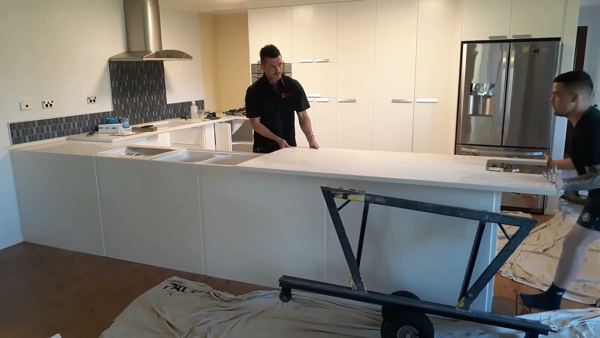
An installer finishing an edge on site, cabinets masked against the dust
Field
Templater (countertop templater)
On the road — homes and job sites›
Also called Template technician, field measure technician
A countertop templater visits the site once the cabinets are in and captures the exact dimensions the countertop will be made to. Modern shops use a digital templating device that produces a file the programmer works from; some still make physical templates. Also confirms the material, edge profile, sink and cooktop details and the overhangs with the customer. Where this templating stage fits in the making-of sequence is covered in Step 2.
Works
On the road — homes & sites
Gets here from
Installation, almost always
Moves up to
Estimating, coordination, programming
What good looks like
Accurate under time pressure with no second chances
Explains options clearly — edge profiles, seams, overhangs, where a seam has to go
Spots problems on site that cause grief later: out-of-square walls, cabinets not level, tight access
Documents thoroughly enough that the shop never has to call back
The path in and up
Almost always reached from installation — an installer who has fitted stone knows what will actually get through a doorway. From templating the moves are into estimating, project coordination, or programming.
Can you answer these?
What does a template have to capture that a drawing cannot recover later?
How do you decide where to put a seam?
What are the most common ways a measure goes wrong, and which of them show up only at install?
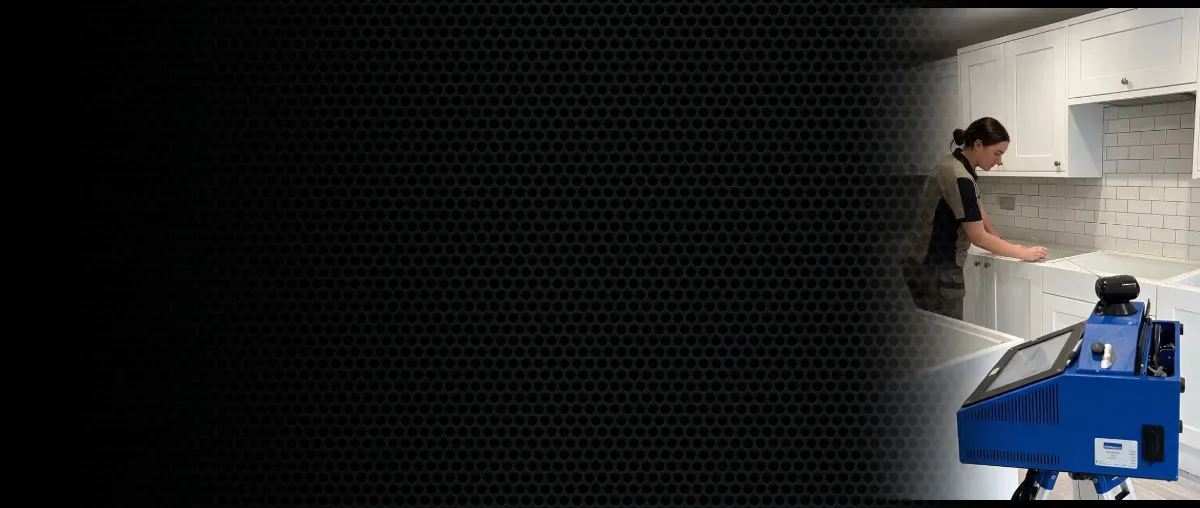
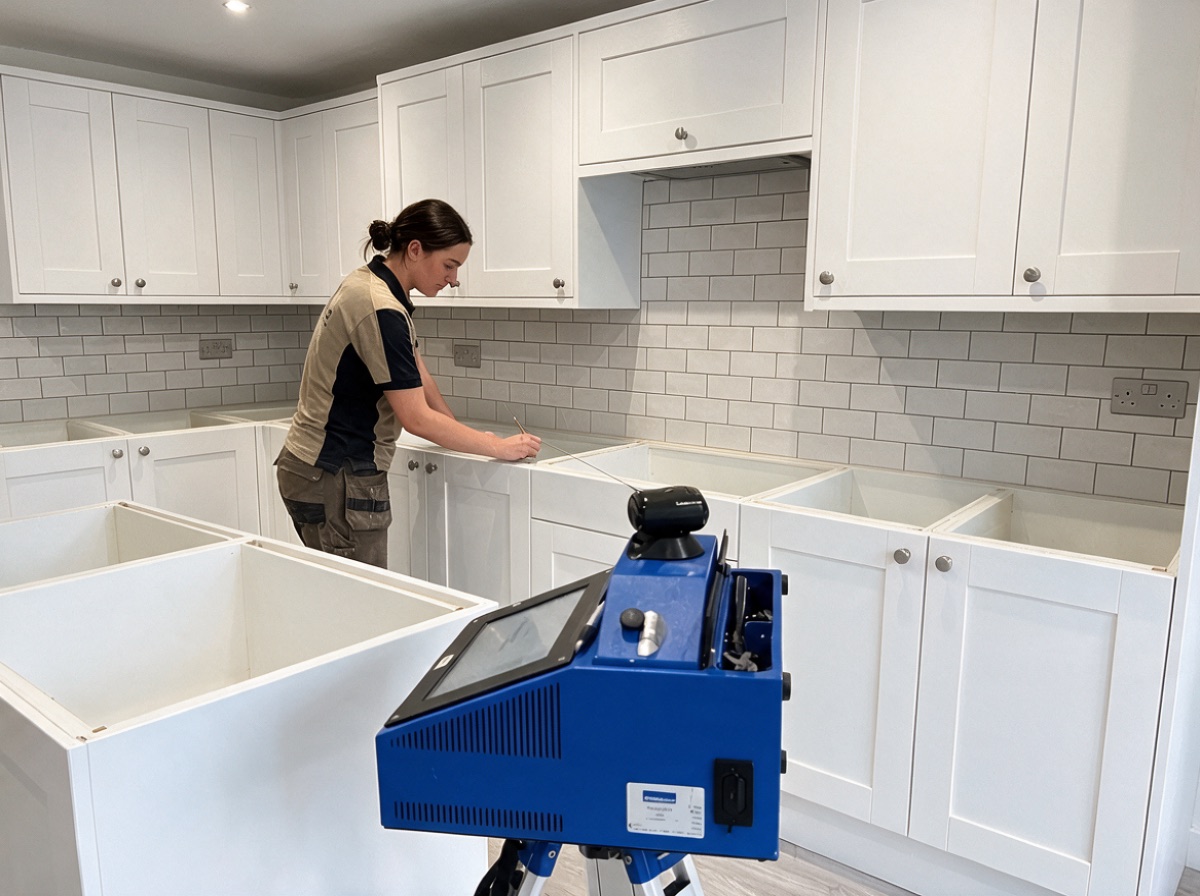
Capturing every dimension in the room before a slab is touched, on a digital templating device
Shop office
CAD/CAM Programmer
Office, inside the shop›
Also called Digitizer, drafter, shop drawing detailer
Turns the field template and the designer's specification into a fabrication-ready shop drawing and the cut files the saw and CNC build from. Handles slab layout, seams, edge details, cutouts, tolerances and the nesting that decides how much of the slab gets used.
Gets here from
CAD, templating, or fabrication
Moves up to
Production mgmt, coordination, estimating
What good looks like
Stone-specific, not just CAD-literate — a general drafter produces drawings that look right and don't work in a shop
Queries a measure that looks wrong instead of drawing it as received
Understands yield and lays the job out to waste as little slab as possible
Fast — the drawing step is often the bottleneck between template and cut
The path in and up
Entered from CAD training or from templating and fabrication. Progresses into production management, project coordination or estimating. Some move toward whole-shop CNC programming.
Can you answer these?
What has to be true of a drawing before it can feed the machines directly?
Do you handle slab layout and nesting, or does the sawyer?
How do you catch a measure that will not build?
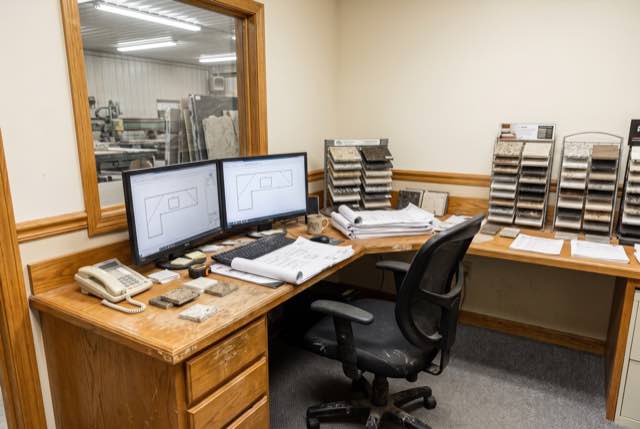
The drafting station over the shop floor — turning the measure into a cutting plan
Shop office
Estimator
Office, occasionally on site›
Also called Quoting, sales estimator
Prices the work — reading plans and specs, calculating slab quantities and cutting requirements, and producing the quote the shop wins or loses the job on. In smaller businesses this is bundled with sales; in larger commercial shops it is a distinct role.
Gets here from
Measuring, drafting, or the floor
Moves up to
Project coordination, commercial roles
What good looks like
Prices from a real understanding of what the job costs to make
Fast turnaround — quotes go stale quickly
Accurate on slab quantities and waste allowances
Comfortable dealing with builders, kitchen dealers and designers
The path in and up
Almost always from measuring, drafting or the shop floor — someone who can look at a plan and know a detail will take an extra half day. Progresses toward project coordination or a commercial role.
Can you answer these?
Why does estimating usually come from the shop, templating or drafting rather than from sales?
How do you allow for waste and vein matching in a quote?
What most often makes a quote go wrong?
Pricing a job off the plans — square footage, edge profiles, cutouts and waste
Office
Project Manager / Coordinator
Office›
Also called Project coordinator, commercial PM
Runs the commercial side of larger jobs — schedules, procurement, change orders, submittals and coordination with the general contractor. Seen at shops doing commercial and multi-family work rather than one-off kitchens. People in this role often come from mainstream construction more than the stone trade.
Gets here from
Construction PM, or up from estimating
Moves up to
Senior PM / commercial management
Note
Often from construction, not stone
What good looks like
Strong commercial construction background
Understands stone or facade packages specifically, or can learn them fast
Organized and precise; the role is about not letting things fall through
Handles general contractors confidently
The path in and up
Comes in from construction project coordination, or up from estimating. Progresses to senior PM or a commercial management role.
Can you answer these?
What changes about coordination when a job goes from one kitchen to a whole building?
What is a submittal package, and what does it have to contain before fabrication starts?
How do you manage change orders and submittals end to end?
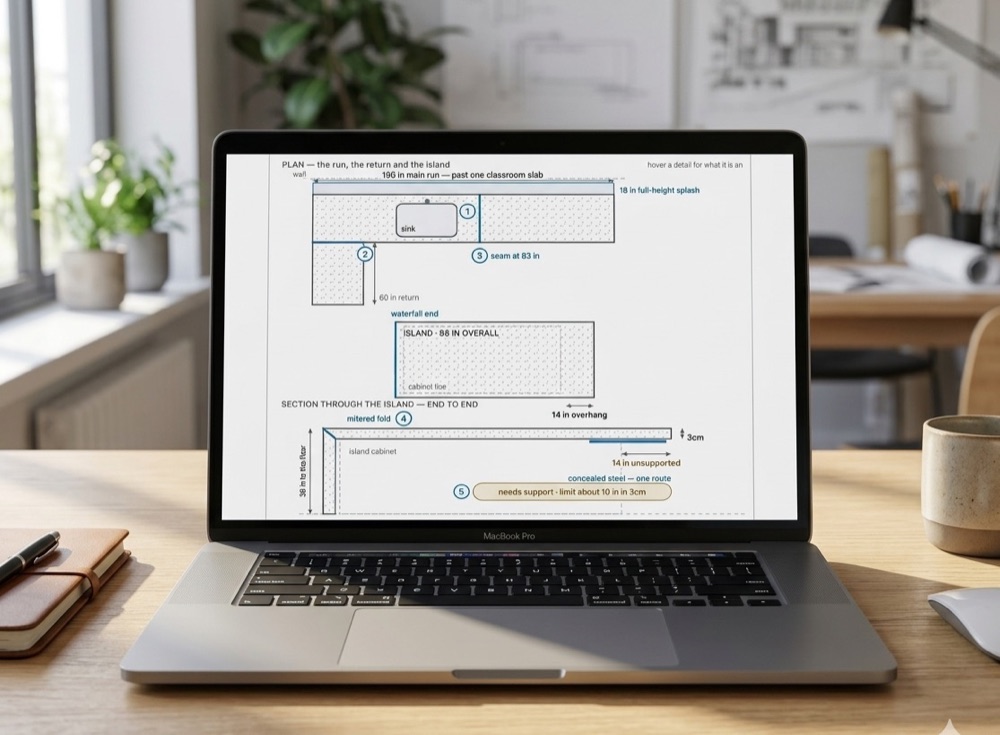
A job's plan and section on a laptop — what a coordinator works from
Shop
Shop Foreman / Production Manager
Shop floor and office›
Also called Fabrication manager, shop manager, production lead
Runs the shop. Schedules fabrication against install dates, allocates work across the machines and benches, manages slab stock and ordering, coordinates the template, drawing and install teams, and owns quality and safety on the floor. In most shops this is the operational center of gravity.
Gets here from
Lead, after years on the tools
Moves up to
Operations or general manager
What good looks like
Came up through fabrication or installation and can still do the work
Keeps the schedule realistic and flags changes early
Manages a trade workforce well — a specific skill not everyone has
Improves throughput without wrecking quality
The path in and up
Reached from lead or supervisor after substantial time on the tools. Progresses to operations manager or general manager across multiple locations.
Can you answer these?
What does a foreman need to know about every machine on the floor in order to schedule it?
How do you reschedule when a slab breaks or a template comes back wrong?
What have you changed that improved output without hurting quality?
The shop floor a foreman runs, machines and benches in view
Shop or field
Install Helper / Shop Helper
Shop or on site›
Also called Helper, shop hand, install assistant
Assists the fabrication team in the shop or the install crew on site — moving and handling granite and quartz slabs, cleaning, preparing, carrying, and learning the trade by watching and doing. Physically demanding, and the standard way into the industry.
Works
Shop or on site
Gets here from
The entry point — no experience needed
Moves up to
Installer, fabricator, or CNC operator
Time to move up
1-3 years
What good looks like
Shows up on time and works at the crew's pace — install days run to a schedule the whole shop depends on
Actively wants the trade rather than treating it as temporary work
Takes instruction and safety seriously
The path in and up
Helper into installer, or shop hand into fabricator or CNC operator, typically over one to three years. This is where nearly everyone in the trade starts, and the role to look at when a shop is willing to train.
Can you answer these?
What is the difference between a shop day and an install day for a helper?
What does a helper pick up first that leads toward fabrication or install work?
How much does a fabricated island section weigh, and how many people does it take to carry one up a flight of stairs?
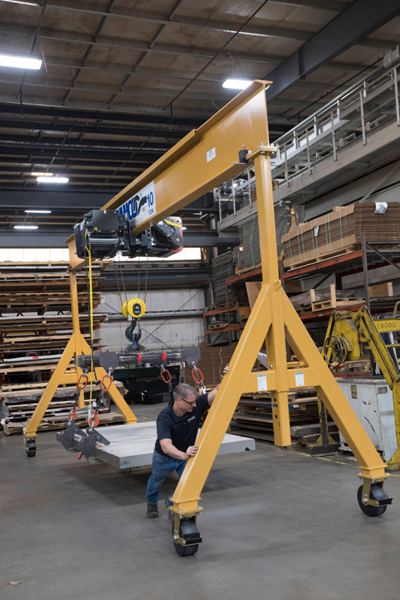
A helper carrying and steadying stone on an install
Neighboring trade
Solid Surface Fabricator (neighboring)
Shop and site›
Also called Corian fabricator, solid surface installer
Works acrylic and polyester solid surface (Corian and similar) rather than stone — routing, thermoforming and adhesive seaming into continuous runs with integrated sinks. A related but distinct skill set; the trade association (ISFA) runs a fabrication training program, and the material manufacturers run their own certified-fabricator programs.
Works
Shop & site
Material
Corian-type solid surface, not stone
Certification
ISFA (recognized for the trade)
Note
Related but a distinct trade
What good looks like
Clean invisible seams — the signature of good solid-surface work
Understands thermoforming and repair, which stone does not involve
Often crosses into stone shops that offer both materials
The path in and up
A trade in its own right. Solid-surface fabricators sometimes move into stone, but the cutting and finishing skills are different enough to need real retraining.
Can you answer these?
Do you seam and thermoform, or install only?
Which solid-surface operations have no equivalent in stone work?
What training routes exist for solid-surface fabrication, and who holds the credential — you or the shop?
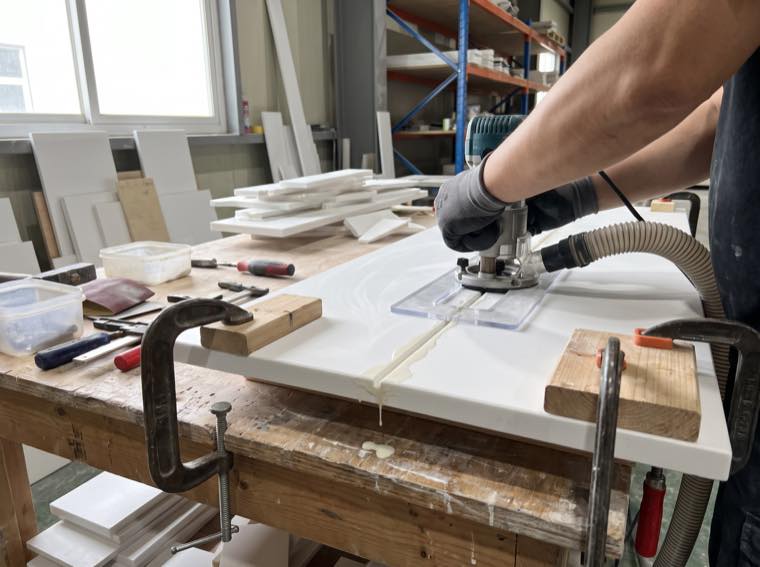
Solid surface fabrication — routing a seam so the join disappears, the two pieces clamped and bonded
Different trade
Stonemason (masonry — different trade)
Site, yard or workshop›
Also called Cut stone mason, stone setter, restoration mason, monument mason
The traditional building trade — cutting and setting stone for walls, facades, veneer, monuments and restoration. In US usage this is what "stonemason" means, and it is a genuinely different trade from countertop fabrication. It is here so you can tell the two apart, not because it is countertop work.
Works
Site, yard or workshop
Trade
Building masonry — not countertops
Path
Its own apprenticeship (BAC & others)
Note
Here so you can tell the two apart
What good looks like
Hand skills and an understanding of traditional materials and mortars
Often formally trained, sometimes through a masonry apprenticeship
Realistic that countertop fabrication is a different job if that is what they are exploring
The path in and up
A career of its own, often through a registered masonry apprenticeship (BAC and others) — a pathway that does not exist in the same form for countertop fabrication, which is learned on the job. Some masons cross into counters for the steadier indoor work, and where they do, expect a real retraining period.
Can you answer these?
What does a building mason do that a countertop fabricator never does?
Which skills carry over from masonry to countertop work, and which do not?
Why is "stonemason" a misleading title to search countertop work under?
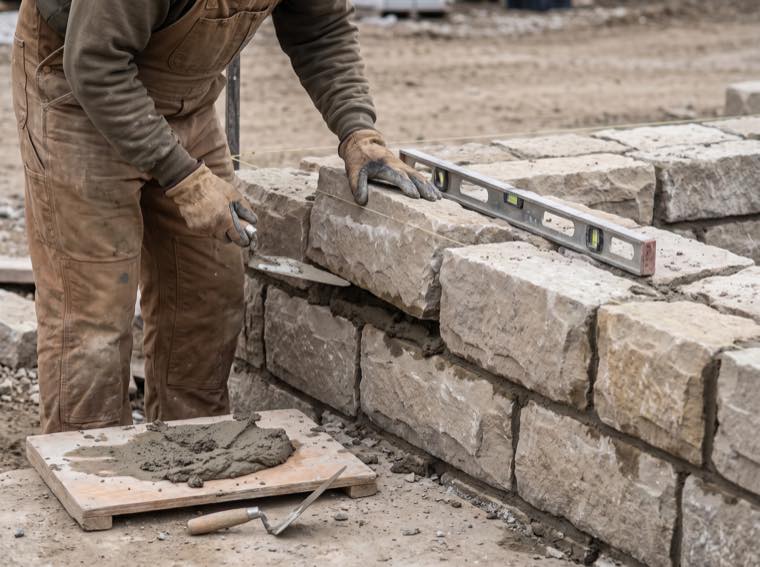
Architectural masonry — setting a dimensional stone into a wall, a different trade from countertop work