
Texas Countertop Fabricator & Installer Pay Guide
Compare Texas countertop fabricator and installer pay using May 2025 government wage benchmarks and an August 2026 job-ad snapshot, with limits explained.
Contents11 sections
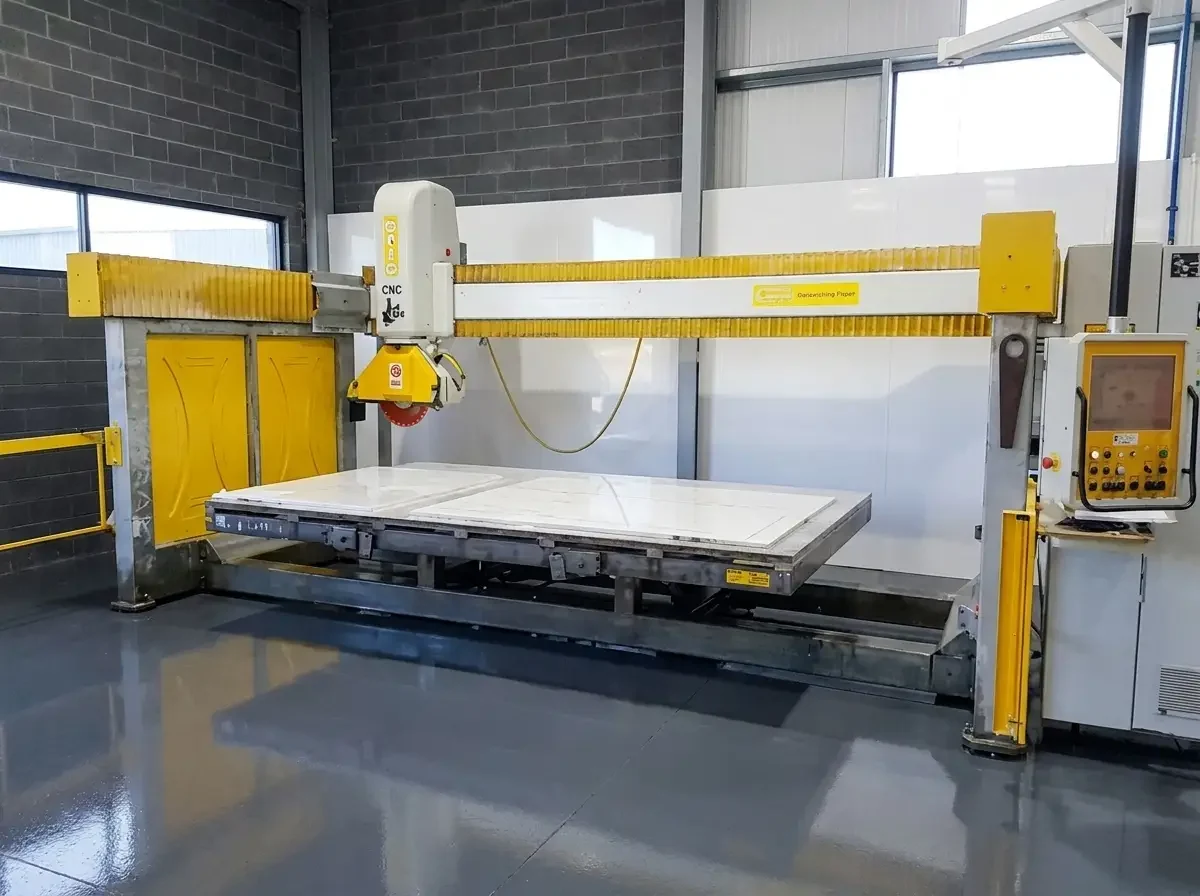
This guide compares countertop fabricator and installer pay in Texas using two historical sources: May 2025 government wage estimates and an August 2026 sample of advertised offers. They measure different things. The broad occupation figures are benchmarks, while the job-ad ranges describe the offers recorded in that sample, not what every countertop worker earns.
There is no government job code that isolates countertop fabrication and installation across the whole trade. Read each official figure as a labeled occupational proxy. The advertised ranges below are an editorial snapshot with a limited, non-random sample; the underlying individual ads are not published here, so they cannot be independently checked from this page. Confirm any current offer directly with the employer.
Key takeaways
- The working middle of the trade in Texas is about $19–$28/hr. Government median pay for the closest occupations runs roughly $19.23–$22.61/hr; live shop postings for experienced hands cluster a little higher, around $20–$30.
- Texas pays close to Florida for this work and a bit under the national average — but the state’s biggest metros carry the better packages.
- The bottom of the ladder is set by the market, not the law. Texas sets its minimum wage at the federal $7.25/hr — below every entry rate in our posting sample, so it didn’t bind pay in what we saw; entry pay ($13–$16/hr for helpers) is driven by what shops must offer to hire.
- Texas metro shops more often carry real benefits. 401(k) with a match, health/dental/vision, and paid time off show up more consistently in Dallas, Austin, and San Antonio postings than at the bottom of the market.
- How you’re paid varies by city. Austin shops advertise compressed four-day weeks; Houston install work skews heavily to piece-rate subcontracting (“per completed unit,” or weekly sub pay) rather than hourly.
- No state income tax in Texas means a given hourly rate carries more take-home than the same rate in an income-tax state.
How much countertop workers earn in Texas, by role
The ranges below combine the government baseline (see methodology at the end) with a survey of live Texas job postings collected in August 2026. Postings are aggregated into ranges; individual employers are not named.
| Role | Typical Texas range (hourly) | Notes |
|---|---|---|
| Install helper / shop helper (entry) | $13 – $18 | “Will train” common; market-set, well above the $7.25 legal floor |
| Polisher | $18 – $23 | Hand and machine edge polishing |
| Fabricator (saw / general) | $18 – $28 | The core shop role; wide spread by experience |
| CNC operator | $20 – $25 | AutoCAD/basic programming ability pushes to the top |
| Countertop installer | $20 – $25 | Metro shops often add 401(k) + health benefits |
| Lead fabricator / production lead | $24 – $34 | Supervisory pay; bilingual leadership valued |
A few patterns behind the table:
- Entry pay is a market rate, not a legal one. Texas sets its state minimum wage at the federal $7.25/hr (unchanged since 2009) — below every disclosed entry rate in our sample, so it didn’t appear to bind pay in those postings. The $13–$16/hr range describes helper offers in the sample, not a proven market-wide floor. The lowest advertised Texas rate we found was $13/hr in a smaller inland market; metro helpers start higher.
- Compressed weeks are a Texas quirk worth knowing. Some Austin-area shops advertise a Monday–Thursday schedule (e.g. 5:00 am–3:30 pm), trading a longer day for a three-day weekend. It doesn’t change the hourly rate, but it changes the job.
- Some Houston install work is advertised as independent-contractor work. Rather than an hourly wage, several Houston listings we saw quoted per-completed-unit or weekly crew pay (one ad quoted “$1,000–$5,000 weekly” for a crew supplying its own truck, tools, and liability insurance). That figure is gross pay for a self-employed crew — it can cover more than one worker plus their business costs — not a W-2 hourly rate, so it isn’t comparable to the ranges above. (An ad calling a role “1099” doesn’t by itself settle a worker’s legal classification.)
- Bilingual ability is a live advantage. Many of the Houston and metro-Texas ads we saw run in Spanish or are explicitly bilingual, and several lead roles specifically want English/Spanish fluency to run a crew.
What the government data says
For a benchmark that isn’t tied to this week’s openings, the U.S. Bureau of Labor Statistics (BLS) Occupational Employment and Wage Statistics program is the anchor. Because no single code means “countertop fabricator,” we use two proxies:
- Tile and Stone Setters (SOC 47-2044) — the closest match for countertop installers.
- Molders, Shapers, and Casters, Except Metal and Plastic (SOC 51-9195) — the closest match for shop fabrication workers.
Both are imperfect: 47-2044 includes tile setters who never touch a slab, and 51-9195 includes a range of manufacturing molders. Treat them as the neighborhood, not the address.
Texas, May 2025 (most recent release), hourly:
| Measure | Installers (47-2044) | Shop workers (51-9195) |
|---|---|---|
| 10th percentile | $16.88 | $13.90 |
| 25th percentile | $19.28 | $17.08 |
| Median | $22.61 | $19.23 |
| Mean | $24.53 | $20.15 |
| 75th percentile | $26.45 | $22.92 |
| 90th percentile | $38.89 | $27.53 |
| Statewide employment | 1,260 | 2,550 |
For context, the national medians are higher — $26.77/hr for installers and $22.20/hr for shop workers. Texas runs below the U.S. on both proxies — about 15% below on the installer proxy and about 13% below on the shop-worker proxy. That said, the installer 90th percentile ($38.89) is notably high, reflecting the well-paid lead and specialist roles the live postings also show.
Two adjacent codes fill in the specialists:
- CNC Tool Operators (SOC 51-9161): Texas median $23.31/hr, with a very large base of 13,190 employed. That code is dominated by metal machining (Texas has a big manufacturing sector), so read it as a loose ceiling for stone CNC work, not a stone-specific figure — but it does tell you Texas has deep CNC labor supply.
- Crushing, Grinding, and Polishing (SOC 51-9021): Texas median $21.68/hr (1,440 employed) — a rough proxy for dedicated polishers.
Wages are still moving. The BLS Employment Cost Index shows private-industry wages and salaries up about 3.3% over the year to Q2 2026, so expect these 2025 figures to read a little higher by the next release.
Texas pay by metro
Installer pay (SOC 47-2044) varies across Texas metros. BLS median hourly wages, May 2025, plus the shop-worker (51-9195) median where the installer estimate isn’t published:
| Metro | Installer median | Shop-worker median | Installer employment |
|---|---|---|---|
| Dallas–Fort Worth–Arlington | $23.04 | $20.43 | 430 |
| San Antonio–New Braunfels | $21.48 | — | 90 |
| Houston | not published | $18.04 | not published |
| Austin–Round Rock | not published | $20.17 | not published |
Dallas–Fort Worth leads the published installer figures. BLS did not publish a separate installer-proxy estimate for Houston or Austin (it withholds estimates that don’t meet its publication standards, which can include reliability or confidentiality concerns; it doesn’t say which applies here), so the table shows the shop-worker proxy median for those two metros instead — a different occupation, not an installer wage, so don’t rank it against the installer columns. Separately, our posting sample found several Houston install offers advertised as independent-contractor or per-unit crew work. Genuinely self-employed contractors fall outside OEWS (per-unit employees may not, and an ad’s label doesn’t settle legal status) — but that’s an observation about the local market, not the reason BLS withheld the number.
The live postings fill the gaps the government data leaves: Austin-area fabricator and CNC roles were advertised at $18–$25/hr, San Antonio installers at $20–$25/hr with full benefits, and Dallas-area lead fabricators as high as $24–$34/hr.
How Texas countertop pay is actually structured
The hourly number is only part of the deal. From the live postings surveyed:
- Metro shops more often carry a real benefits stack. In Dallas, Austin, and San Antonio, it’s common to see 401(k) with a match, health/dental/vision, and paid time off and holidays — sometimes with a growth path spelled out (“into a Lead Installer role”). Health coverage frequently starts after a 60–90 day probation and the 401(k) match after a year. Smaller and rural shops more often list pay only.
- Company vehicles are common for install and template crews — a company truck, tools, and equipment for daily travel to job sites within a radius of the shop. Explicit per-diem travel allowances were rarely mentioned in the employee roles we saw; several sampled contractor listings expected crews to supply their own vehicle.
- No state income tax on wages. Texas levies no individual state income tax (it’s constitutionally prohibited), so — all else equal — a given hourly rate carries more take-home than the same rate in an income-tax state. (Actual net pay still depends on federal and payroll taxes, benefits, and other deductions; purchasing power also depends on local living costs.)
- Training and credentials didn’t show a clear pay premium. OSHA 10 and 30 (course-completion cards, not certifications) and Natural Stone Institute accreditation appear in Texas ads as “preferred” or “nice to have,” but our posting sample showed no consistent stated hourly premium for them. NSI accreditation is a company-level credential, not something an individual worker holds.
The Texas countertop industry: who’s hiring
Countertop fabrication in Texas is a fragmented, small-shop trade. Federal Quarterly Census of Employment and Wages (QCEW) data for 2025 counts about 209 establishments in the cut-stone and stone-product manufacturing industry (NAICS 327991) statewide, employing roughly 2,058 people, with the establishment count down about 2.8% year over year — a slight contraction, in contrast to Florida’s modest growth. (That industry code is broader than countertops alone — it also captures monument and building-stone shops — so read it as a proxy for the employer base, not an exact count.)
Those shops concentrate in the big metros: Harris County (Houston) carries the largest cluster of stone-product employers in the state, followed by Dallas and Tarrant counties (DFW), with Travis and Williamson (Austin) and Bexar (San Antonio) rounding out the map. The median shop is small — a handful of workers — which is why pay is set shop by shop rather than by any statewide scale.
Is countertop work a growing trade in Texas?
Yes. State long-term projections (2024–2034) have the broader occupations this trade maps to growing at double-digit rates: tile and stone setters (the installer proxy) are projected to grow about 14% over 2024–2034, and molders, shapers, and casters (the shop-worker proxy) about 10%, with on the order of 200 and 310 average annual openings respectively. Two caveats: those occupations are wider than countertops alone, so read the direction rather than a countertop-specific headcount; and “annual openings” counts growth, occupational transfers, and labor-force exits (including retirements) — not just newly created jobs. Either way, Texas’s population and homebuilding growth keep demand firm. (Projections are the state 2024–2034 long-term series aggregated by Projections Central; treat them as secondary to the wage data above.)
Frequently asked questions
How much do countertop installers make in Texas?
The August 2026 advertised-pay summary below lists experienced Texas installer roles at $20–$30 an hour. The government median for the closest occupation (tile and stone setters) is $22.61/hr, and the August 2026 Texas posting sample for experienced installers includes offers in the $20–$25 range at metro shops, with lead roles higher. In Houston, several listings we saw were per-unit or independent-contractor crew work rather than hourly.
What’s the starting pay for a countertop helper in Texas?
The August 2026 advertised-pay summary lists Texas helper roles at $13–$18/hr. Texas sets its minimum wage at the federal $7.25/hr — below every entry rate we saw, so it didn’t bind pay in our sample. The sample does not establish a market-wide starting rate.
Is countertop fabrication a good-paying trade in Texas?
Compare the complete offer with the work expected and your own costs. The August 2026 advertised ranges include higher figures for some experienced and lead roles, but a cross-section of ads cannot establish a career progression or a timetable for raises. Ask about training, benefits and the responsibilities needed for the next level.
Does a CNC operator earn more than a hand fabricator?
It’s close — the two overlap. CNC operation tends to lift the floor a little (advertised around $20–$25/hr vs $18–$28 for hand fabrication). The clearer step up is programming: BLS puts CNC programmers’ median pay around $33/hr in Texas versus about $23/hr for operators — a distinct, more advanced role, though in smaller shops one person may do both. Texas also has an unusually deep CNC labor pool. (Those are all-industry CNC codes, so read them as reference points.)
Why is Houston pay hard to pin down?
Two separate things. First, BLS didn’t publish a Houston estimate for the installer-proxy occupation — it withholds figures that don’t meet its publication standards (which can include reliability or confidentiality concerns), and doesn’t say which applies here. Second, and independently, several Houston listings we saw were advertised as independent-contractor, per-unit or per-week crew work rather than W-2 hourly, so advertised “pay” there often looks like a weekly or per-job figure. The two aren’t necessarily connected, but together they make Houston the hardest metro to pin to a single hourly number.
How to compare a countertop job offer in Texas
- Start with the reporting location and travel area. A role described as Dallas–Fort Worth or Houston can still involve a very different daily drive from your home.
- Ask whether the quoted figure is an individual hourly rate, a crew payment or a piece rate. For piece work, clarify which tasks the payment covers and how the shop explains a typical week.
- Match the responsibility before comparing the number: helper, independent fabricator, lead installer and CNC programmer are different briefs.
- Write down the schedule, overtime expectations, benefits, tools and vehicle arrangements alongside the rate. Keep any relocation discussion separate from the regular wage.
Considering both states? Read the Florida countertop pay guide using the same role and source vintage. Employers can use the hiring brief checklist to make an offer easier to compare; candidates can send their experience and preferences. These guides are historical research, not current vacancies or a promise of pay.
Who publishes this guide
Countertop Jobs is a recruitment company for the US countertop trade — fabricators, installers, CNC and bridge saw operators, templaters, polishers and shop managers. We are new, and this guide is the kind of work we are willing to put our name to now: public wage data read carefully, set next to what shops are actually advertising, with government sources linked and the limitations of the unpublished job-ad sample stated.
If you run a Texas shop and need a seat filled — templater, saw hand, installer, production lead — tell us what the role is. If you work in the trade and want to be on the list when roles come up, send us your details. And if a number here is wrong, tell us that too; we would rather fix it than defend it.
Methodology and sources
Government wage figures are from the U.S. Bureau of Labor Statistics, Occupational Employment and Wage Statistics (OEWS), May 2025 release (the vintage used in this guide), for SOC codes 47-2044 (Tile and Stone Setters, our installer proxy), 51-9195 (Molders, Shapers, and Casters, Except Metal and Plastic, our shop-worker proxy), 51-9161 (Computer Numerically Controlled Tool Operators), and 51-9021 (Crushing, Grinding, and Polishing Machine Setters, Operators, and Tenders). There is no OEWS code specific to countertop fabrication, so every one of these is a broad, all-industry proxy, not a countertop-specific figure. OEWS also covers wage-and-salary workers and excludes the self-employed and independent contractors — a real limitation in a trade with a lot of contractor install crews (and part of why the Houston and Austin installer estimates are hard to read). Where BLS did not publish a metro estimate (Houston and Austin installers), that is noted in the text; BLS does not disclose the specific reason. Wage-growth context is from the BLS Employment Cost Index (private industry, wages and salaries, +3.3% over the year to Q2 2026). Industry and establishment figures are from BLS Quarterly Census of Employment and Wages (QCEW), 2025, NAICS 327991 (Cut Stone and Stone Product Manufacturing), which is broader than countertops alone. Minimum-wage and tax figures are current as of August 2026; Texas sets its minimum wage at the federal rate.
August 2026 advertised pay ranges are drawn from a survey of roughly 12–18 Texas countertop job postings with disclosed pay, collected in August 2026 across public job boards. Advertised pay is aggregated into ranges; individual employers are not named. Job ads expire quickly and pay varies by shop, experience, and week — treat these as an August 2026 snapshot, not a fixed scale.
Sources, with the vintage each figure is drawn from:
- Wages, percentiles and employment — U.S. Bureau of Labor Statistics, Occupational Employment and Wage Statistics (OEWS). May 2025 vintage; national, Texas and metro estimates for SOC 47-2044, 51-9195, 51-9161 and 51-9021. Read August 2026. OEWS publishes one vintage at a time, so the linked pages will show a newer release than May 2025 once BLS updates them.
- Wage growth — BLS Employment Cost Index (ECI). Private industry, wages and salaries, +3.3% over the year to Q2 2026. Read August 2026. Used for direction of travel only; OEWS is not built for time-series comparison.
- Establishments and industry employment — BLS Quarterly Census of Employment and Wages (QCEW). 2025 data, NAICS 327991 (Cut Stone and Stone Product Manufacturing), Texas. Read August 2026. Broader than countertops alone.
- Occupational growth and annual openings — state long-term projections, 2024–2034, aggregated by Projections Central. Read August 2026. Secondary to the wage data; the occupations are wider than this trade.
- Texas minimum wage — the Texas Workforce Commission guidance identifies the federal and Texas rate as $7.25/hr. Read September 2026; check the source for applicable requirements.
- Advertised pay — a survey of roughly 12–18 Texas countertop job postings with disclosed pay, collected across public job boards in August 2026. Not a random sample, not a statistical estimate, and not comparable to OEWS; employers are not named.
Originally published August 2026. Guidance and presentation updated September 7, 2026; the underlying wage figures were not refreshed in this revision. BLS figures retain their stated May 2025 vintage, and the advertised-pay sample remains August 2026.
Published by
Countertop Jobs
Countertop Jobs recruits for the US countertop trade — fabricators, countertop installers, CNC operators, sawyers, templaters, polishers and shop managers — for fab shops across the country. We write about the work: what shops pay, what the machines and the material actually demand, and what changes on the floor.
Where this article quotes numbers, the sources and the workings are set out in how we put these figures together.
Figure look wrong, or out of date for your market? Tell us and we’ll fix it.